
In June 2026 the US FDA allowed twenty specific ZYN nicotine pouches to use an explicit reduced-risk marketing statement. That is not a safety endorsement for the category, but it does carry a clear signal: where adult smokers switch completely and the product has passed review, the smokeless oral format is being brought into a more serious harm-reduction discussion. The product is not safe and nicotine is addictive — but both the regulatory and the commercial value of this category are becoming explicit faster.
Gen Z Is Large, but a Brand May Only Address the Adult Part of It
Any discussion of Gen Z has to start by drawing the age line. In 2026 Gen Z still includes minors; in the United States, nicotine products may only be sold to adults 21 and over. What is actually worth studying is the adult consumer group that already uses nicotine and happens to be younger and more digital — not turning “youth appeal” into appeal to minors.
A study covering six US cities and 942 young adults reported a mean sample age of 27.61; 34.6% had heard of nicotine pouches and 9.8% had ever used them. It is not a national probability sample and cannot stand for all of Gen Z, but it is enough to show that category awareness has formed among young adults — and that competition is shifting from educating the market to winning the first impression.
They Are Not Buying a Smoking Sensation — They Are Buying Low Disruption
Unlike a cigarette, which has to be lit and produces smoke and odour, a nicotine pouch is small, needs no combustion and usually requires no spitting. For adult users that makes it easier to bring into an office, a commute or a social setting. In the same study, among the 92 people who had used them, 29.3% mentioned discreet use, 26.1% the absence of tobacco odour, 26.1% the ability to use them where other tobacco products are banned, 25.0% convenience, and a further 26.1% curiosity about flavour.
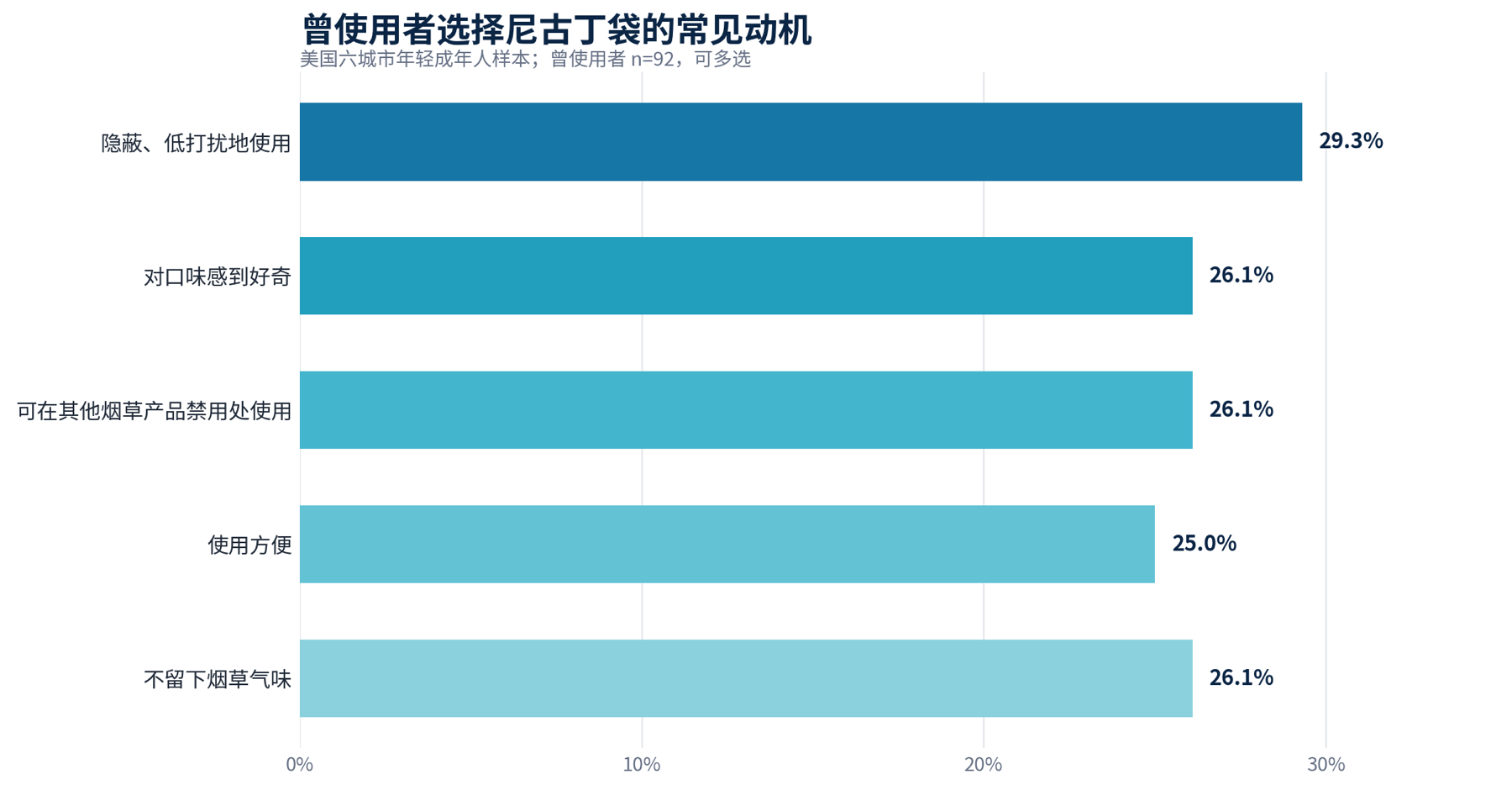
These figures are more reliable than the under-evidenced functional narratives around focus, sugar control or fitness: what younger adult users value first is convenience, low disruption, less odour and a choice of flavours. For a brand, the packaging has to make that situational value legible in a few seconds.
Packaging Is Not a Shell — It Is the First Salesperson on the Shelf
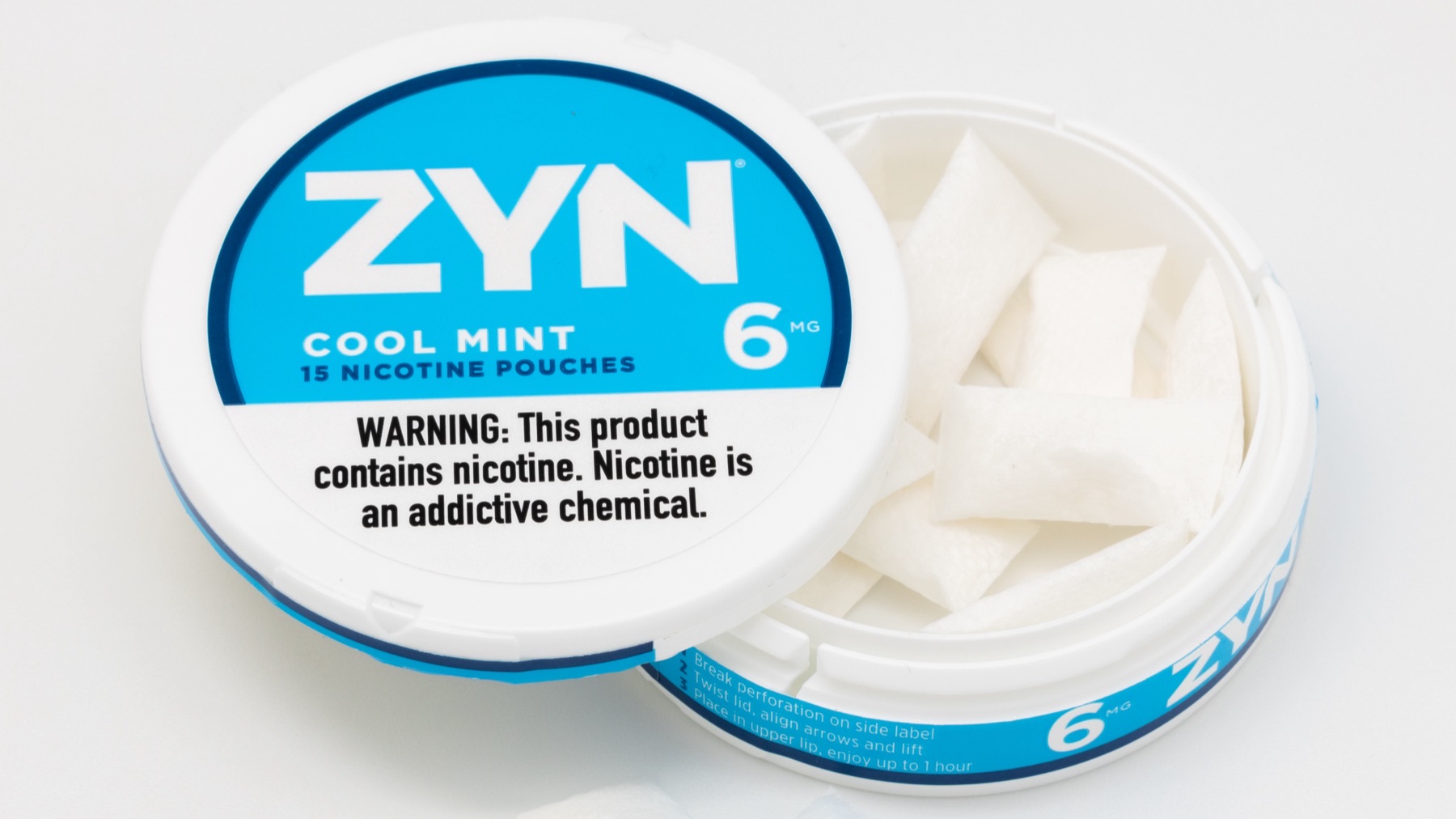
On a convenience store shelf or in an e-commerce thumbnail, what a consumer sees first is not the formulation but the lid, the colour, the strength marking and the warning text. A 2023 experiment with 301 US adults found that the nicotine concentration presented on the pack affects how consumers judge the product’s risk; a separate randomised trial with 47 nicotine and tobacco users aged 21–34 found significant differences in how appealing different flavours were rated.
Identification has to be fast. Use a consistent colour and texture system to separate flavour, strength and range so users find the familiar one at a glance — while avoiding candy-like, cartoon-like and game-like treatments.
The feel has to be consistent. A fine matte finish, a clean parting line, edge radius and the feedback of opening and closing together decide whether this reads as a reliable product.
The structure has to fit the occasion. Portable size, one-handed operation, repeated opening, an optional temporary compartment for used pouches, and a child-resistant structure where the market requires one — each directly affects the repeat-purchase experience.
The information has to be credible. Nicotine content, flavour, count, warnings, batch and recycling marks should be clearly legible and adjusted to the regulations of the market of sale. Good packaging is not the most decorated; it is the packaging that lets an adult user identify it faster, carry it more willingly and trust it more easily.
The Growth Has Already Happened — Now the Brand Needs a Recognisable Can
CDC aggregate data shows US nicotine pouch sales rising from 126 million pouches in August 2019 to 808 million in March 2022. More recently, PMI disclosed that nicotine pouch shipments in its Americas market rose from 581.4 million cans in 2024 to 797.9 million cans in 2025 — about 37.2% growth on the published figures. The latter is one company’s shipment volume rather than the size of the whole market, but it still gives a direct read on expanding demand and an accelerating supply chain.
As more and more similar round cans appear on the shelf, the formulation decides whether a product stays, and the packaging decides whether it gets picked up first. For brands going overseas, the can stopped being a standard part at the end of procurement long ago. It is the shared starting point of product positioning, compliance expression and scaled delivery.
From Mould to Finished Product, Making Packaging an Amplifier for Growth
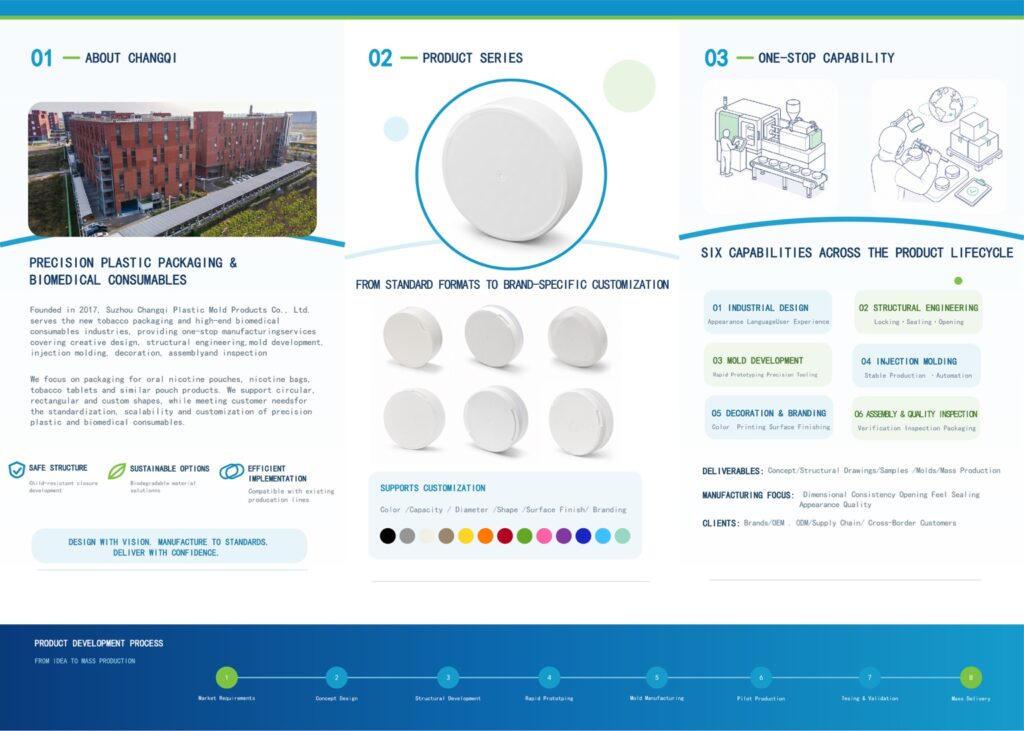
Suzhou Changqi Plastic Mold Products Co., Ltd. focuses on plastic packaging solutions for oral nicotine and nicotine pouches, developing collaboratively across can appearance, structural design, mould development, injection production, surface effect and quality inspection. Brands can choose multi-colour shells, matte or special textures, standard round cans, custom structures and child-resistant solutions according to their positioning, so that visual identity, opening experience and production fit are settled together from the start of a project. Capability and certification details should be taken from the published information on the company site.
Product strength determines long-term value; packaging determines how a brand is seen the first time. Build the difference into your next oral nicotine pack or email jason@szchangqi.com.