Market trend × regulatory signal × packaging value.
Cigarettes Recede, Nicotine Consumption Switches Tracks
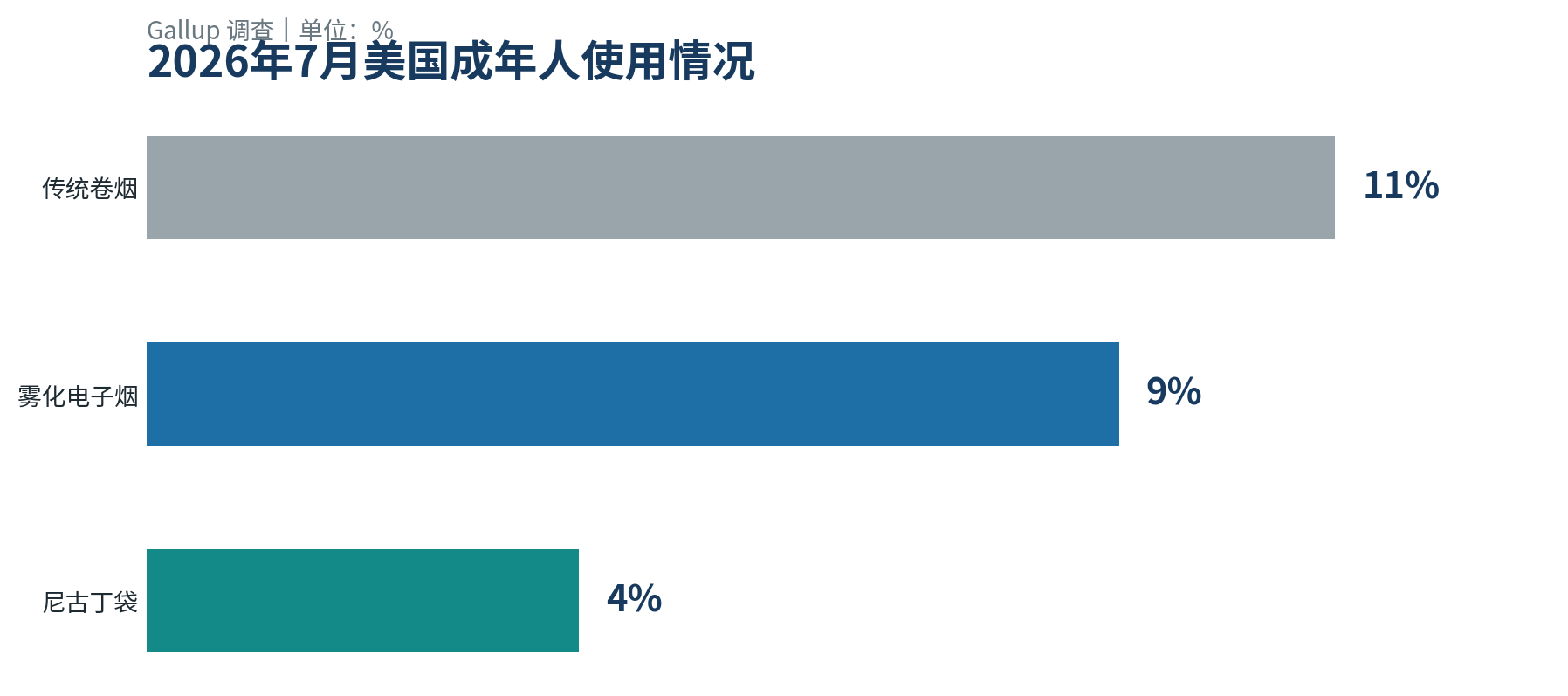
Conventional cigarettes are under pressure from tobacco control policy, health awareness and a shrinking set of places they can be used. CDC data shows the US adult cigarette use rate falling from 42.4% in 1965 to 11.6% in 2022; Gallup’s July 2026 survey recorded 11% cigarette use, 9% vaping and 4% nicotine pouch use. Different survey bases cannot simply be stitched into one substitution curve, but the direction is clear enough: nicotine demand has not stayed with cigarettes, and the point of entry is fragmenting.
Heated tobacco and vaping both followed the move away from smoke, but each still depends on a device, a battery or a consumables system. A nicotine pouch produces neither smoke nor vapour, needs no charging or maintenance, and is small and easy to carry — which is why it fits commuting, travel and other occasions that reward portability and low disruption. That removal of the device is a significant reason for how fast it has expanded.
High Growth and High Margin Put the Pouch at the Centre of Capital
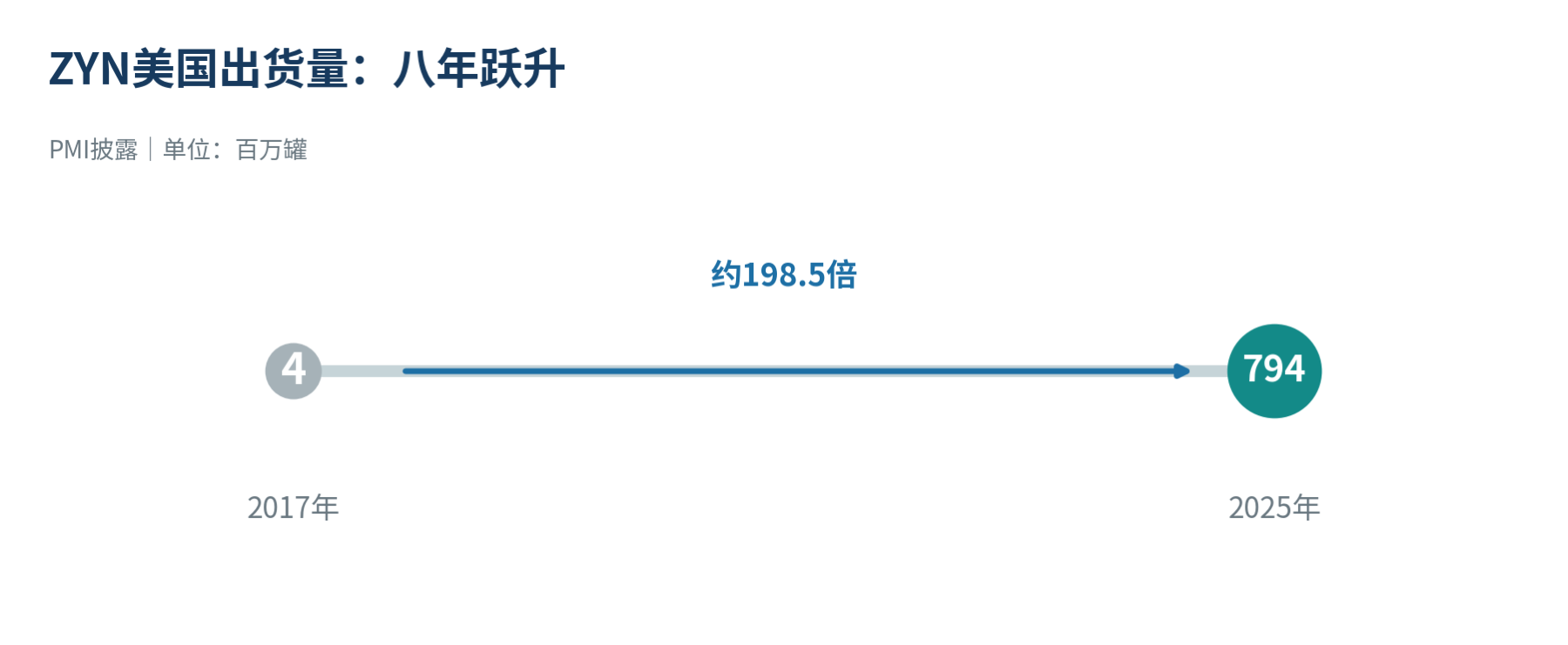
PMI disclosed that ZYN shipments in the United States rose from 4 million cans in 2017 to 794 million cans in 2025. In 2025 alone, US nicotine pouch shipments grew nearly 37% and international markets grew more than 35%; PMI’s smoke-free business contributed 41.5% of group net revenue and close to 43% of gross profit that year. Nicotine pouches are still not the whole of a tobacco major’s business, but they have become the growth engine that gets the most attention.
The profit structure explains the capital bet better than the volume does. Reuters, citing PMI data, reported that in 2024 gross profit per thousand units from its US nicotine pouch business was roughly eight times that of its international cigarette business; IQOS heated tobacco, by comparison, was around 2.4 times. BAT expects global nicotine pouch industry revenue to rise from £4 billion in 2025 to £11 billion in 2030. High growth, light hardware and higher unit profit together make up the commercial appeal of the category.
Regulation Is Not a Green Light for Everything — It Marks Out a Lane
In January 2025 the FDA authorised twenty ZYN nicotine pouches for US sale through the PMTA pathway for the first time; in June 2026 it allowed those same twenty specific products to use a particular reduced-risk statement. The signal leans positive for the industry: nicotine pouches are gaining a clearer route through scientific review and compliance, and a threshold is forming for brands that genuinely have R&D, quality and supply chain capability.
The boundary is just as explicit. The authorisation covers designated products only; it does not mean the category is “safe” or “FDA approved”. The FDA stresses that quitting tobacco and nicotine entirely remains the most beneficial choice for health, and that only adult smokers who switch completely from cigarettes to an authorised product may reduce their exposure to the many harmful chemicals in cigarettes. Stating that boundary clearly is what makes a brand’s communication durable.
Beyond the Formula, Packaging Is Becoming a Second Product Line
Flavour and nicotine release decide the first purchase. The packaging experience runs through every subsequent carry and open. Whether the can resists crushing, whether the lid closes consistently, whether the sealing structure limits the effect of ambient humidity — all of it changes the consumer’s judgement of quality. FDA technical material on the stability of smokeless oral tobacco notes that packaging material and environmental conditions significantly affect the product’s moisture content. For nicotine pouches, which are also oral and equally dependent on moisture state and stability, that means container design is not decoration. It is part of managing product stability.

Look further and child-resistant structure, repeat-opening life, a temporary storage compartment, size and capacity, surface feel, colour and brand identity all combine into the competitiveness of the packaging hardware. As flavours become easier to copy, the can the consumer holds every day is more likely to become the most immediate carrier of a brand’s difference.
Moving Packaging Capability Forward Into Brand Development
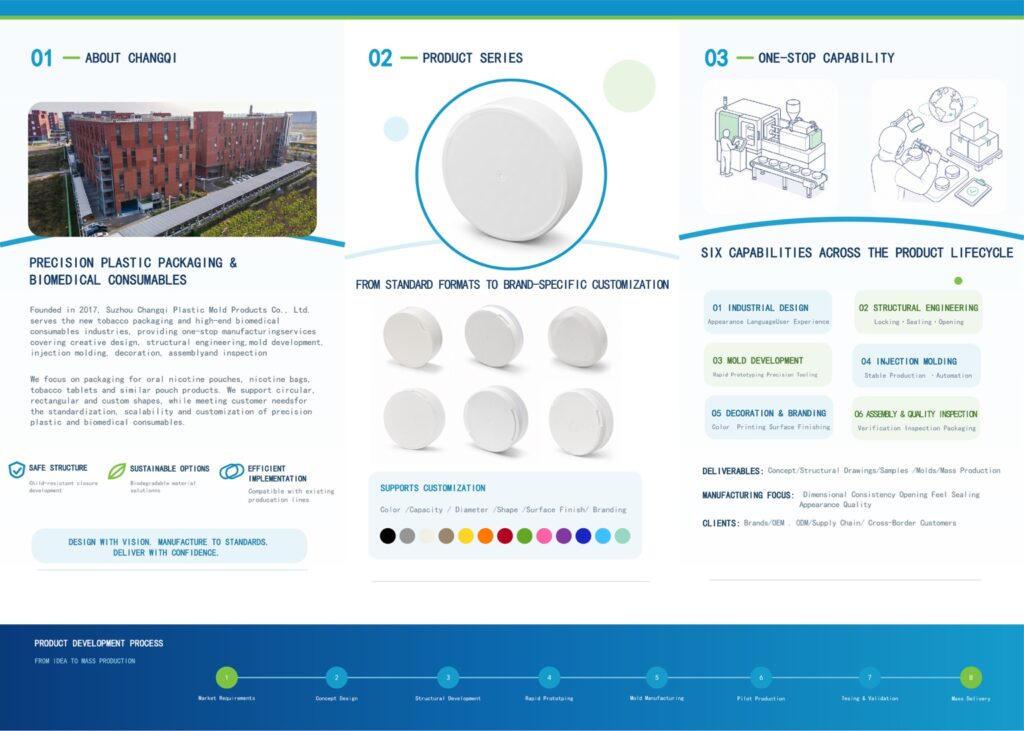
Suzhou Changqi Plastic Mold Products Co., Ltd. focuses on plastic packaging for oral nicotine and nicotine pouches, working end to end from exterior and structural design through mould development and injection production to inspection and delivery. The product line shown on the company site covers food-grade PP standard cans, custom formats and child-resistant solutions; ISO 8317 and 16 CFR 1700.20 documentation can be provided for the relevant child-resistant products, with applicability still to be confirmed against the target market, the can format and the test reports.
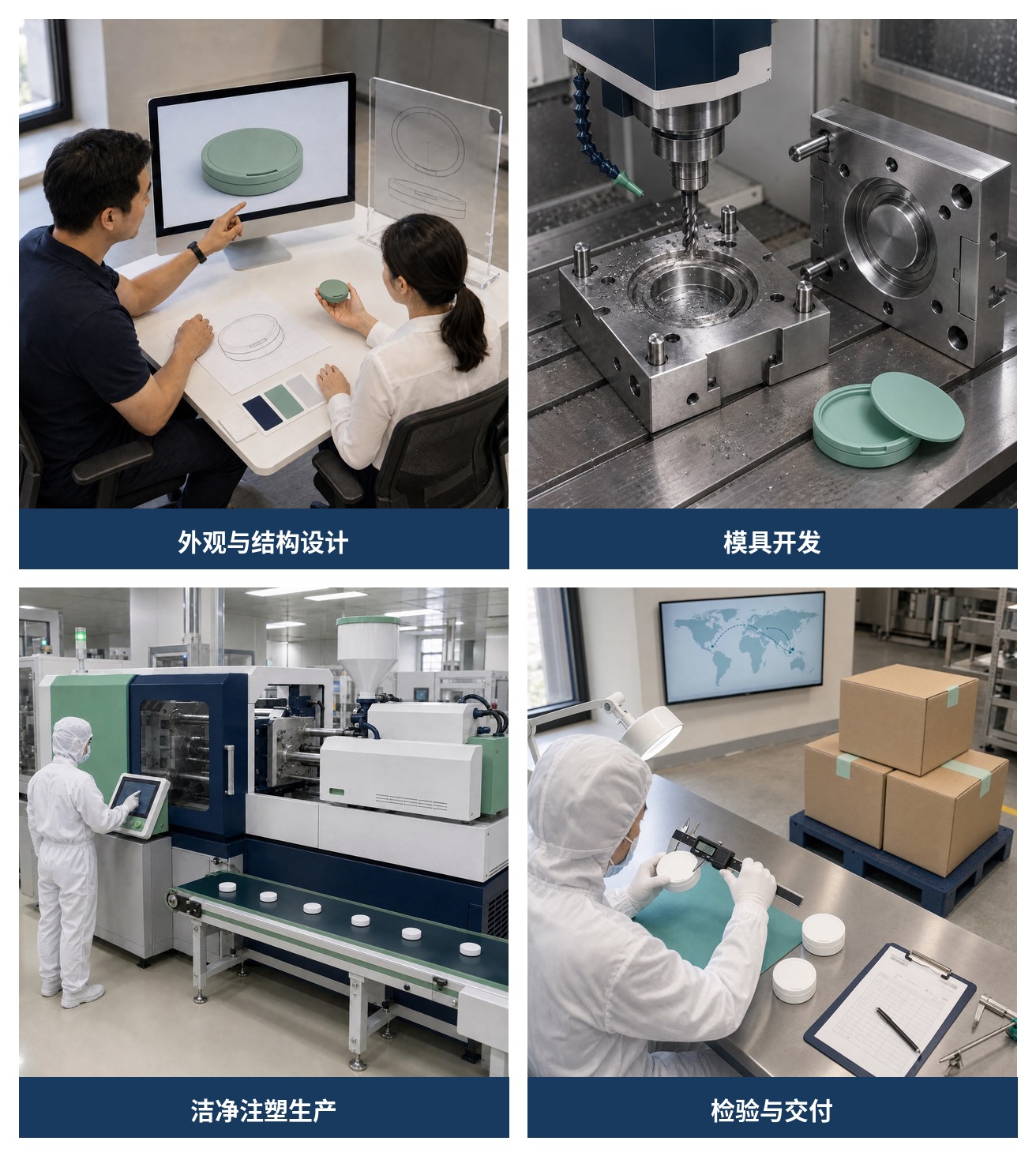
For brands preparing to enter the US, Europe, the Nordics and other overseas markets, the earlier the packaging supplier is brought into product development, the better the chance of solving sealing, feel, structure, visual identity and volume consistency together.
Make the packaging the first thing your brand presents to a global market — talk to our engineers or email jason@szchangqi.com.